
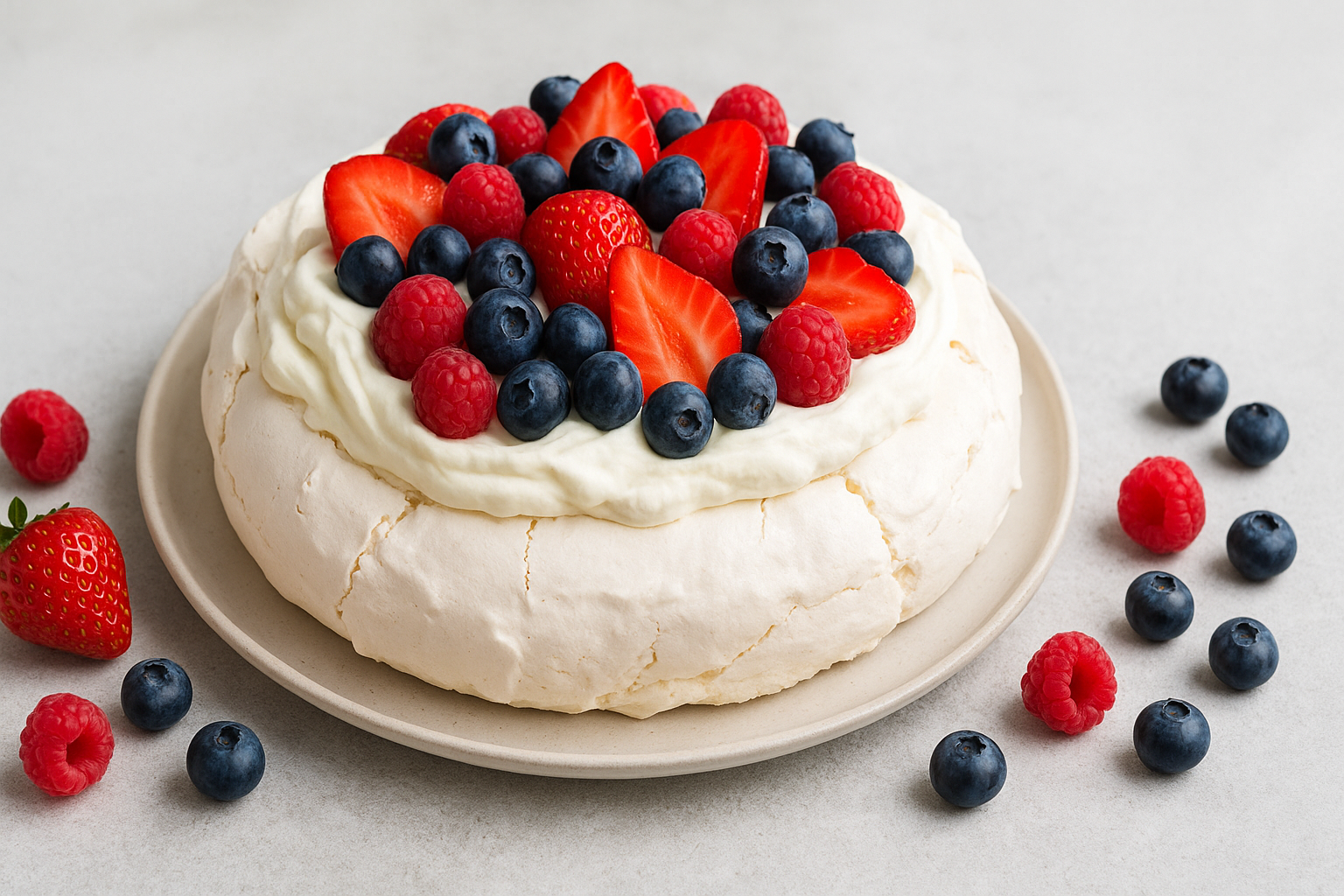

Pavlova is a classic dessert that captures the delicate balance between elegance and indulgence. Named after the famous Russian ballerina Anna Pavlova, this cake is renowned for its crisp outer shell, marshmallow-soft interior, and a crown of whipped cream and fresh fruits. Discover the delightful Pavlova Cake Recipe, combining crisp meringue, whipped cream, and fresh fruity toppings.
Although it may look sophisticated, the Pavlova cake is surprisingly achievable at home with just a handful of ingredients and a bit of patience. Its lightness and beauty make it an ideal centerpiece for celebrations, whether it’s a festive holiday table, a birthday gathering, or even a casual tea party with friends.
Origins of Pavlova
The Pavlova dessert is steeped in culinary history and is a point of pride for both Australia and New Zealand, as both countries claim to have invented it during the 1920s to honor Anna Pavlova’s tour. Over time, it has become a cherished dish worldwide. What makes this recipe enduring is its simplicity combined with the opportunity for creativity. Bakers can personalize it with different fruits, sauces, or garnishes while still keeping its authentic foundation intact.
Ingredients You’ll Need
The Pavlova cake relies heavily on pantry staples, making it both budget-friendly and versatile. At its core, the recipe calls for egg whites, sugar, cornstarch, vinegar, and a touch of vanilla extract. The egg whites, beaten into glossy peaks, give the dessert its signature airy texture.
Sugar stabilizes the meringue, while cornstarch and vinegar ensure that the interior stays pillowy instead of turning dry. The toppings usually include freshly whipped cream and an assortment of fruits such as strawberries, kiwi, passionfruit, blueberries, or raspberries. These not only add a burst of freshness but also enhance the presentation with vibrant colors.
Preparing the Meringue Base
The success of a Pavlova rests on the meringue. Begin with room-temperature egg whites, ensuring no trace of yolk or grease contaminates the bowl. Whip the egg whites until soft peaks form, then gradually add sugar while beating continuously.
This slow incorporation ensures the sugar dissolves completely, preventing a gritty texture. Once the mixture is glossy and forms stiff peaks, gently fold in the cornstarch, vinegar, and vanilla. The mixture should feel thick and glossy, holding its shape when spooned onto a parchment-lined baking tray.
Form the meringue into a round disk, creating a slight dip in the center to hold the cream and toppings later. The rustic swirls and peaks on the sides give the Pavlova its artistic flair.
Baking the Pavlova
Baking requires low and slow heat, typically around 250°F (120°C), for about 90 minutes. The aim is to dry out the meringue without browning it, leaving it crisp outside yet soft inside. Once baked, it’s crucial to leave the Pavlova in the oven with the door slightly ajar until completely cool. This prevents sudden temperature shocks, which can cause cracks. While some cracking is natural and adds charm, careful cooling helps maintain structure.
Topping and Assembling
The true beauty of Pavlova emerges when it is dressed with whipped cream and fruit. Use heavy cream whipped with a touch of sugar and vanilla for a silky, cloud-like topping. Spread generously over the cooled meringue base, filling the central dip and allowing it to cascade slightly over the edges.
As for fruits, the possibilities are endless. Tropical options like passionfruit, mango, and kiwi provide a tangy contrast to the sweet base. Berries such as strawberries, raspberries, and blueberries lend juiciness and color. For an extra twist, drizzle fruit coulis, melted chocolate, or even caramel sauce over the top. Some people even sprinkle toasted nuts or edible flowers for sophistication.
Serving Suggestions (Pavlova Cake Recipe)
Pavlova is best served fresh, ideally within a few hours of assembly. The meringue absorbs moisture from the cream and fruits, which can soften its crisp shell over time. Serve chilled for a refreshing bite, making it particularly delightful in warmer months. Pair it with hot tea or coffee, or present it as a light conclusion to a heavy meal. Its balance of sweetness and freshness makes it universally appealing.
Tips for Perfect Pavlova
- Use superfine sugar – It dissolves more easily in the egg whites, giving a smoother texture.
- Avoid humidity – Moisture in the air can ruin the crispness of the meringue.
- Don’t overbeat the whites – Stop once stiff peaks form, as overbeating can lead to collapse.
- Prepare just before serving – Assemble the cream and fruit shortly before serving for the best texture.
Why Pavlova Stands Out
What makes Pavlova cake extraordinary is not just its taste but also its visual impact. It resembles a graceful cloud topped with a colorful garden of fruits, embodying both delicacy and festivity. The contrast between crisp and soft textures, sweet and tangy flavors, and creamy and airy layers creates an unforgettable experience. Unlike heavy cakes, Pavlova feels light and uplifting, which is why it remains a timeless favorite across generations.
Concluding Insights
The Pavlova cake is more than a dessert—it is a celebration of textures, flavors, and artistry. From the moment the meringue is whipped to the final flourish of fruits, it invites creativity while rewarding patience. Though simple in essence, its elegance elevates any occasion.
Whether you’re an experienced baker or just beginning your culinary journey, mastering the Pavlova cake recipe is a delightful achievement. With its crisp shell, marshmallow heart, creamy topping, and fruity adornments, this cake is proof that sometimes the simplest recipes can deliver the most stunning results.