
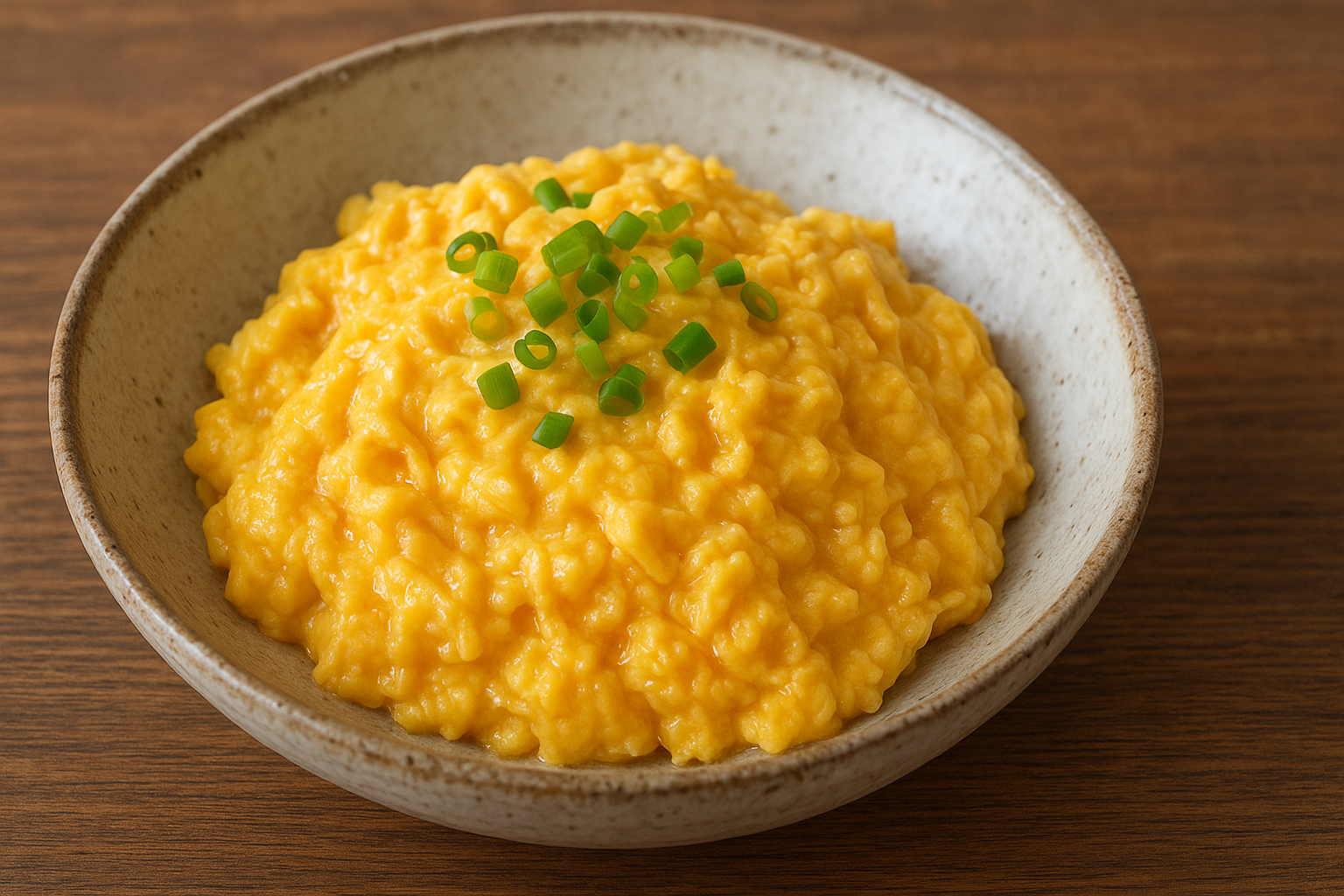

Scrambled eggs are a beloved breakfast staple around the world, but Japan has a unique way of elevating this simple dish into something delicate, fluffy, and flavorful. Known for their attention to texture, balance, and presentation, Japanese cooks often prepare scrambled eggs with a special technique that results in a soft, silky consistency that melts in the mouth.
Unlike the denser Western-style scramble, Japanese scrambled eggs are lightly cooked, slightly custardy, and seasoned with ingredients that enhance umami, giving them a distinct identity.
Have a look at: Hamburger And Eggs Recipe
A Culinary Tradition of Simplicity and Elegance
In Japanese cuisine, eggs hold a prominent place. From tamagoyaki (the rolled omelet) to oyakodon (chicken and egg rice bowl), eggs are celebrated for their versatility. The Japanese scrambled eggs reflect this tradition of turning humble ingredients into something refined.
What sets this dish apart is its preparation technique and the incorporation of flavors like dashi (a savory broth), mirin (sweet rice wine), or soy sauce. These additions transform ordinary eggs into a satisfying dish that pairs beautifully with rice, toast, or even vegetables.
Ingredients That Define the Flavor
A Japanese scrambled eggs recipe usually starts with fresh eggs, preferably organic, for better flavor and texture. To achieve a smooth custard-like consistency, the eggs are whisked gently until uniform but not overly aerated. Seasoning is often kept minimal yet impactful.
A splash of dashi adds depth, mirin contributes a mild sweetness, and soy sauce provides a touch of savory richness. Some recipes include a little sugar for balance, while others prefer the eggs to lean purely toward the savory side. Butter or neutral oil is used for cooking, although some chefs prefer sesame oil to give the dish a nutty aroma.
The Cooking Technique
Cooking Japanese scrambled eggs is all about patience and precision. The pan is heated gently, and butter is allowed to melt without browning. The beaten eggs are poured in, and instead of stirring constantly as in Western scrambles, the cook often uses slow, sweeping motions or even gently folds the mixture. The goal is to allow the eggs to set gradually, forming soft curds while retaining a moist, creamy interior.
Some variations involve stirring continuously with chopsticks in a figure-eight motion, ensuring that the texture remains airy and delicate. The eggs are removed from the pan just before they fully set, as residual heat continues to cook them, leaving them soft and tender. This subtle undercooking is a hallmark of Japanese scrambled eggs and is what gives them their signature melt-in-the-mouth quality.
Serving Suggestions
Japanese scrambled eggs are versatile and can be enjoyed in various ways. Traditionally, they are served over a bowl of warm steamed rice, creating a comforting and filling breakfast. This version is often accompanied by pickles, miso soup, or grilled fish to complete the meal. For a more modern take, they can be placed atop buttered toast, garnished with nori strips, or sprinkled with sesame seeds. Some chefs also top the eggs with finely chopped scallions, shiso leaves, or even ikura (salmon roe) for an elegant finish.
Pairing the eggs with sides like sautéed mushrooms or spinach can add texture and nutritional value. For those who prefer richer flavors, a drizzle of soy sauce or a dash of furikake seasoning can enhance the overall taste.
A Balance of Comfort and Refinement
What makes Japanese scrambled eggs special is the balance they strike between comfort food and culinary artistry. They are quick to prepare, requiring just a few ingredients, yet the attention to detail in cooking transforms them into a refined dish. This reflects the broader philosophy of Japanese cuisine, which emphasizes harmony, simplicity, and respect for ingredients.
End Summary
The Japanese scrambled eggs recipe demonstrates how a simple dish can be elevated through technique and thoughtful flavoring. By using high-quality ingredients and carefully controlling the cooking process, this recipe produces eggs that are creamy, tender, and packed with subtle umami. Whether served with rice for a traditional touch or paired with toast for a fusion breakfast, Japanese scrambled eggs are a delightful way to start the day, embodying both nourishment and elegance.